
Today I am sharing a questionnaire/conversation I had with a very good friend of mine, Laura. We have bonded over many different things and we both have worked in the social work field. Therefore I thought it would be fun to have her join in with her thoughts about her career, and share some of her knowledge, as well as let us in on her experiences with spirituality, and of course… animals! (Because who doesn’t love cute animal pictures?!) So below I join you to read her responses and gush over her pet pics, and some sweet farm animals she helped take care of as well.
_______________________________________________________
Some Q & A with Laura:
Brandy (B): Why did you become a social worker?
Laura (L): I was working as a home care support worker in low-income housing buildings and could not believe the deplorable conditions clients were living in. My supervisor was a social worker and met with the clients to complete needs assessments and advocate for which services they required, which inspired me to want to help people on a larger scale than I was already doing. At the time I had also completed a Bachelors in Psychology and was starting the Pre-Masters program but realized how hands-off and research-focused it was which really wasn’t working for me, so I dropped out and focused on working. When I then learned about Social Work and how applied and practical it was, I was inspired to go back to school for it.
Brandy (B): Good for you completing the Bachelors in Psychology. And totally fair wanting to switch gears and do something more “hands on”. Was Social Work what you expected it would be?
Laura (L): I learned that we can work in many different roles in the social services industry (case workers, counsellors, clinicians, mediators, etc.) whereas before I think my idea of the work was more narrowly based on casework.
B: I think that is a common understanding of the work for most people… that Social Work is mostly casework. (Or sometimes “baby snatchers”, as I have come across, lol). During your schooling, were classes like addictions, mental health, sexual health and loss & grief mandatory, or electives? (Mine were electives which I think is ridiculous!)
L: My situation might be a little unique but I first completed a Bachelors in Psychology which allowed me to complete a Bachelors of Social Work (BSW) in only 2 years as I already had mandatory courses completed. During my BSW I had to choose between two different courses out of a list. I chose Mental Health and Family Violence, but could have chosen others. I don’t think there were courses specifically on sexual health or grief, but I do remember that there was a mandatory Indigenous course I took. I have been very grateful for my psychology coursework as I gleaned a lot of mental health and addictions knowledge from that, which has been enormously helpful for my practice!
B: I would agree… mental health and addictions seemed to be very useful knowledge for any role in Social Work. As a random funny side… Were you expecting as much Math skills needed to be a social worker? (I have found I would need to be like a mini accountant in some positions!)
L: I’ve supported clients with budgeting and food bank referrals but it’s only required some basic math skills thankfully!!
B: Oh that’s awesome! Glad it’s been mostly basic math, and in all honesty, that does seem fitting when working on helping someone with a budget. Switching gears a little… Do you find Social Work to be a rewarding job? What would you say is the “best” part of your job? And the hardest? (Also… please tell us a little about your specific role)
L: I am a Crisis Counsellor supporting individuals and families in mental health crisis either over the phone or in-person. The best part is the rewarding feeling knowing you’ve genuinely helped someone and made a difference in their world. The hardest part is having good work-life balance and boundaries to avoid burning out, which requires ongoing attention and effort on my part. I currently do shift work or on/off rotations of roughly 4 days each, which means long 12-hour work days. I need to be careful to use my days off as efficiently as I can to recharge my battery for the next work rotation.
B: You brought up some excellent points… with burnout and having a good work-life balance. I think for many professionals in this industry it is an ongoing practice to keep oneself feeling healthy so one can continue doing their work. I would imagine your job (like many health professional jobs), can cause some anxiety. In my blog, I talk about spirituality and anxiety… Would you have any experiences with either of these that you would like to share today?
L: I have a moderate level of anxiety that I manage. I find it gets worse when I’m sleep deprived which is another important consideration of my work rotation with long shifts. Thankfully I find that I’m able to turn my work brain off pretty well now once I’m home, but this took practice. I have also been in roles before where this was more difficult to do; thinking about what happened that day or what I had to do the next day, which also feeds the anxiety and makes it difficult to sleep. It’s a vicious cycle that I would caution others to be mindful about as protecting your peace when you’re not working is so important! Although I do crisis work now, most of the calls or sessions are one-offs, so it’s easier to just leave whatever happened that day at work and be ready for whatever happens the next day.
I am also a spiritual person. Since I was little I’ve had strange paranormal experiences around my family home. I made a naive mistake when I was 14 and created a Ouija board out of a piece of leftover drywall at home and an old DVD for the mover. My friends and I would “play” with it and I’m pretty sure this invited a malicious entity into my home that attached itself to me, lasting until my early 20s. It would disrupt me in my half-sleep and play tricks on me. It also seemed stronger when I was going through a difficult time healing from an abusive ex-partner and self-medicating. Out of pure randomness, an acquaintance on Facebook messaged me one day and offered to help me get rid of the entity; I accepted and he did. I still can’t fully explain how he knew or what exactly he did, but it’s been gone since. Nowadays I don’t have as many paranormal experiences, but am still highly interested and fascinated with all things paranormal and my favourite genre is horror. My spirituality tells me that there is continuity after death and this has helped me both personally, in coping with loss, and professionally, in being able to support others who are grieving. My spirituality is also about viewing things in terms of a transference of energy; when I go into session I imagine myself being a sponge soaking up all the negative energy from the other, then later I need to make sure to release that negative energy from myself.
B: Thank you for sharing that with us. We do appreciate you being open and candid with your experiences, and as I’ve shared on my podcast (Between and Book and Bell), I have done something naive with a Ouija board as a teenager, too. I think it is a common thing to do when someone is young and curious about the spiritual realm… especially if someone is like you and me, and enjoys watching horror movies, lol! We sure learn a lot from possession movies and ghost ones… It’s all very interesting and intriguing for sure! I am glad that you had someone help you to release that entity that was attached to you. And you brought up a good point with being like a sponge with your clients, and after a phone call or meeting needing to release any negative energies that came up during your time with them. It is important to not carry someone else’s energies (whether it’s work related or to do with family or friends). I am glad your clients have you as their Social Worker… and am also happy to hear that you not only recognize the need to let go of energies that are not yours, but actively make it a point to release it at the end of your work day. Bravo to you!!
Now let’s chat about something a little more lightweight and “fun”… We are a pet loving community and absolutely love to gush over each other’s pet pictures. Could you please share your pics and your (animal) babies’ names? :0)
L: I am a huge animal person and have always had them in my life! My husband and I have two cats (Pasha, 8 and Tiger Lily, 7) and one bearded dragon (Yoshi, 2) who we love and care for as family. Pasha is an orange tabby male and Tiger Lily is a calico female, both rescues that we adopted when they were 2. Yoshi is a female, and also my first ever reptile, who we adopted as a baby; learning to care for an exotic pet has been a learning curve but definitely manageable and so worth it!


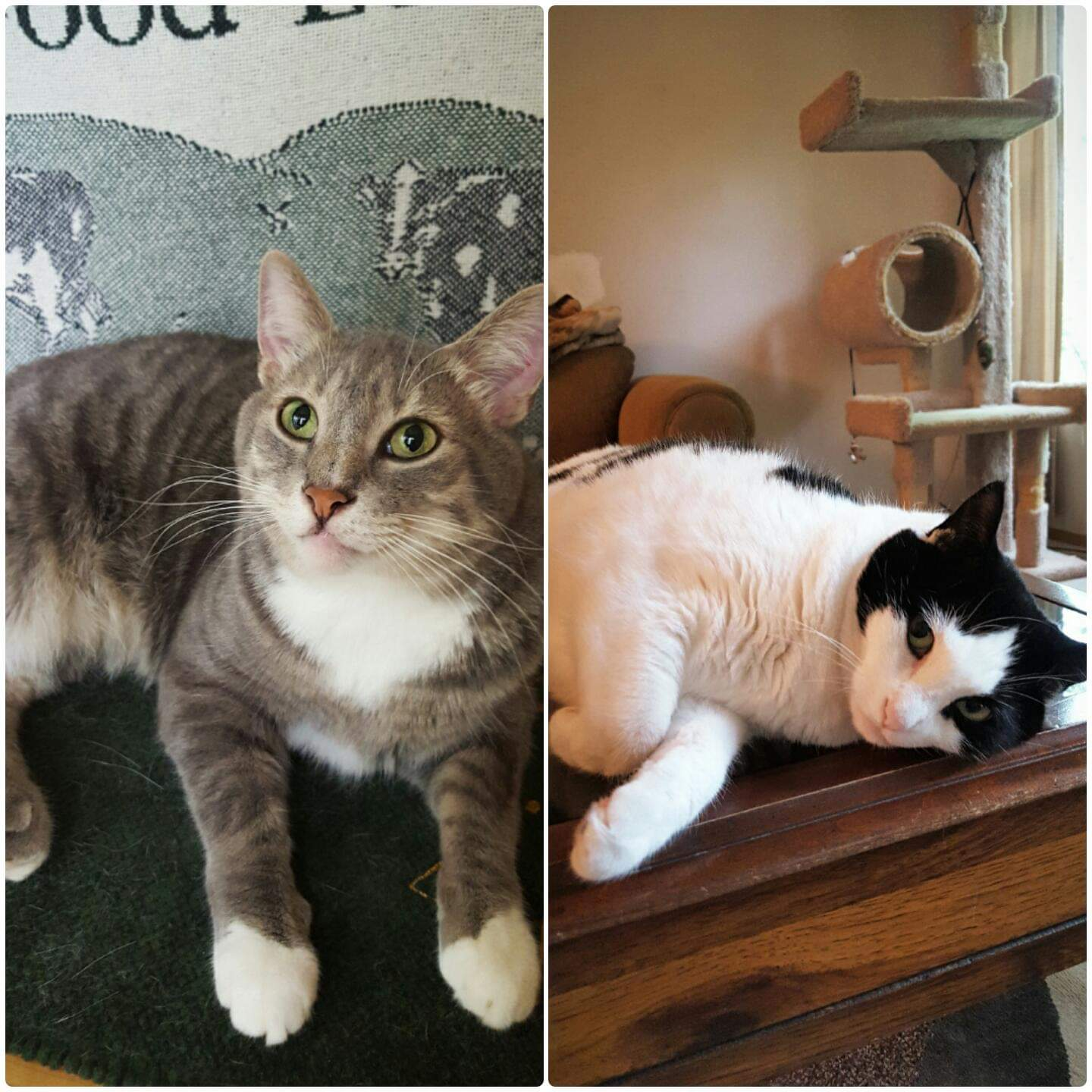
I also have a fur baby who lives with my parents, a grey tabby male named Anakin (13). His sister Nina, who was a bi-color female, passed away last year. Rest in peace beautiful princess.
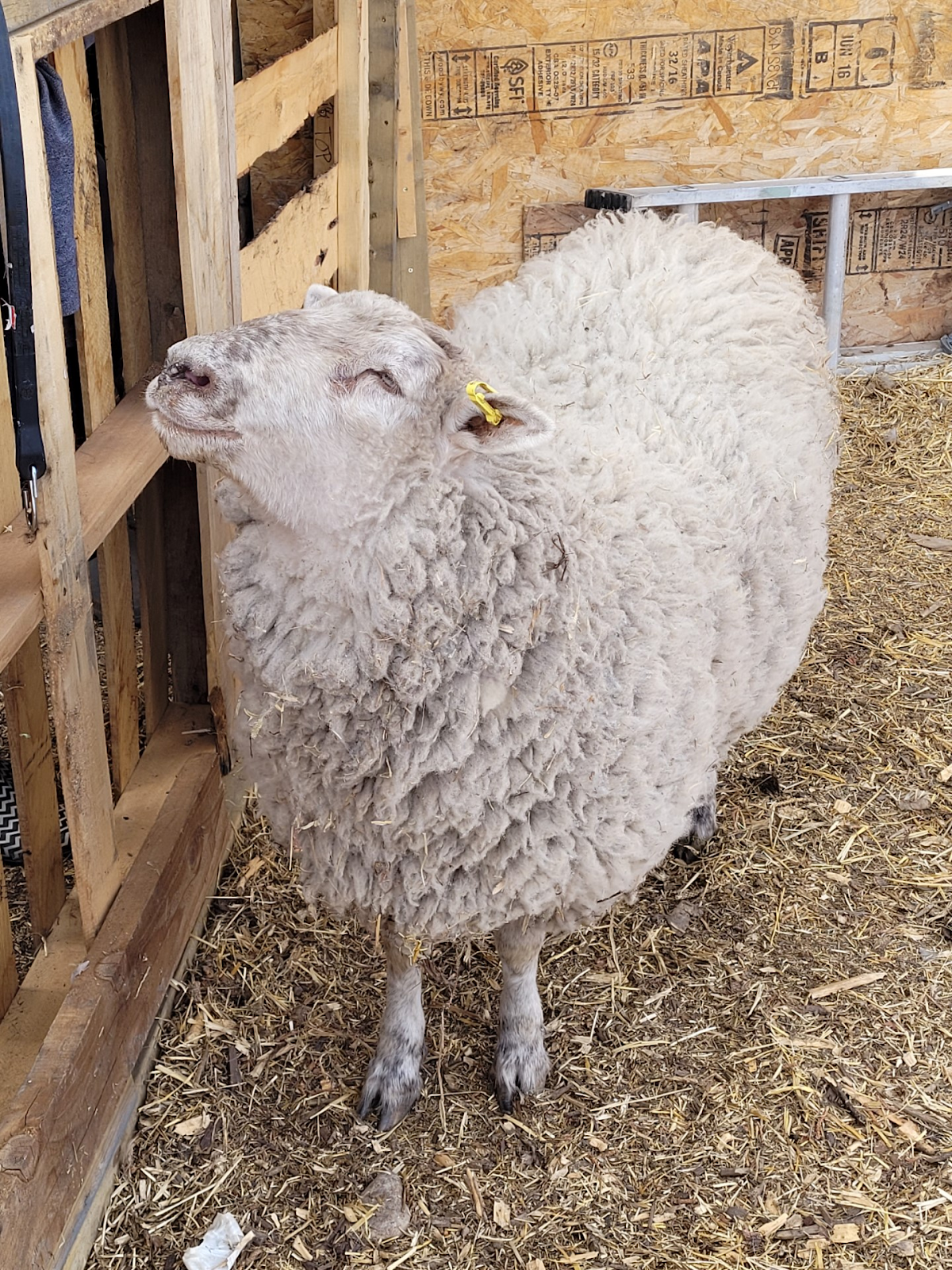
Below are pictures of the farm babies (from a previous farm that (Laura) volunteered with). The black sheep is Peanut, white sheep is Popcorn, and the (sweet) pig is Snowball!!


L: It is a personal goal to develop close bonds with as many different animals as I can. I am extremely passionate about animal welfare and volunteer my spare time to help at animal rescues. I believe that every living being matters and we are all connected.
B: That is absolutely beautiful and well said! Thank you for sharing those pics!! :0) I know that Nina and the farm babies, even though they’ve passed on, are still with you in spirit and keeping an eye over Yoshi in her room. I think that is absolutely a beautiful way to have honoured them, and I do encourage people to remember past animal friends, because they are family, just like you said.
Now, I would imagine in your job you have rather stressful days. What do you do to calm down, and what do you do for FUN?
L: I become mindful about my breathing and slow it down (in through nose, hold, out through mouth, hold.) I use positive self-talk such as “You got this!” or “I am a calm, assertive pack leader,” which I got from the Dog Whisperer and has always stuck with me, haha. For fun I spend time with my animals and play video games, both of which are also self-care activities for me.
B: That’s awesome! Love the self-talk! I know some people also use crystals to help calm their energies or to expel negative ones. Do you have a favourite crystal?
L: Lepidolite because it was the first crystal I ever purchased and it was during a pivotal time in my life. Someone at the time told me that I should purchase the first stone that I was drawn to and it happened to be that one, and when I learned that its properties were related to calming and overcoming dependency, I couldn’t believe how fitting it was.
B: Nice! I am a huge fan of lepidolite, especially at nighttime. Do you prefer to cleanse your energies with things like “fire” (so candles and incense), or “water”… so baths, showers, etc.?
L: I enjoy candles and incense for setting a nice ambiance, but for cleansing it would be more so water for me. Hot showers are one of my biggest coping tools to regulate my heartbeat if I feel my anxiety getting out of hand and I imagine that the water is washing away whatever happened that day.
B: That is so true! I enjoy hot showers for the same reasons! As another random question… Are there any Youtubers or other people on social media that you follow for tarot readings, etc.?
L: I don’t follow any tarot readers on YouTube but I am a gamer and my favourite YouTuber is Markiplier who I have watched since 2013!
B: Haha fair enough! Thank you for sharing. (I’m sure other gamers will appreciate your suggestion). ;0)
If someone is thinking about becoming a social worker… What would you tell them?
L: I would suggest they ask themselves some questions: How passionate am I about mental health? How important is it to me to help others? How in tune am I with my own emotions? How interested am I in human behaviour? How passionate am I about human rights and systemic change? If
B: Those are some awesome points with those questions and definitely good ones to ask yourself before getting into this line of work! What skills do you think a social worker needs to have?
L: Adaptability, empathy, self-reflection, good boundaries, perseverance, and dark humour.
B: Yup, just keep shaking my head in the “yes” position, haha! Very, very important to have those skills… especially the dark humour. Sometimes that’s the only way to get through a hard work day, or hard case. With that said, burnout is a very common thing in this line of work. What do you do to prevent it, and how do you recognize it?
L: I recognize when I am starting to lose interest or motivation to complete work tasks, or go to work at all, and feel fatigued all the time. I also notice that I become more cynical and negative beyond occasional dark humour, which feels very out of character and uncomfortable for me. For prevention,I engage in the self-care and work-life boundaries work I’ve touched on already, but I also want to mention the importance of having a healthy disconnect process from work. Like a mini ritual that signals to your brain that work time is done and now it is home time. For me, I take the parking pass I need to display in my car where I park for work and put it away. Another thing I wanted to mention is that self-care looks different for everyone, it is a trial-and-error process to discover what charges your battery and what depletes it, and by how much. For example, I learned that although volunteering with animals requires more time and physical work from me, it actually recharges my battery.
B: I think that is a very good idea, putting away the parking pass. Definitely small “rituals” like that add up to a lot when winding down from the work day.
I did want to touch on resources… because again you have a lot of experience… So do you have some resources around loss and grief?
L: I’ve heard good things about the Bob Glasgow Grief Support Centre through AHS which offers individual counselling and groups: Richmond Road Diagnostic and Treatment Centre – Grief Support Program | Alberta Health Services
Grief Share also offers quite a few support groups for grief and loss: Grief recovery support groups in Calgary, Alberta – GriefShare
Here also is Children’s Grief Centre which is geared specifically towards supporting children and youth through loss: Children’s Grief Centre – www.hospicecalgary.ca
B: Excellent, thank you for those! How about parenting and/or working with children… Any resources or websites that you would recommend?
L: Families Matter offers various parenting groups which have been helpful for my clients, heard really good feedback about the Caring Dads program recently which I believe is also offered through other agencies sometimes: Family Programs in Calgary | Families Matter
CARYA also offers different parenting groups and programs, one of which being Circle of Security which was a popular one for clients: Our Programs – carya (caryacalgary.ca)
Triple P has also been helpful for my clients who are parents: Get better parenting tips | Triple P – Positive Parenting Program | Triple P Positive Parenting Alberta (triplep-parenting.ca)
B: Awesome, thank you Laura! Thank you so much for all your insights and resources, and just letting us get to pick your “Social Work” brain for the day. :0)
To everyone reading this post, thank you for being here and being a part of this community. Hopefully this post (and previous one with Mackenzie), has been helpful, by shining some light into what a Social Worker does and to also explore other people’s experiences with anxiety and spirituality.
Take care and have a great day!!
-Brandy Marie
 333 The Spiritual | Brandy Marie
Leave a comment